
Whole-home backup power
Standby generators that start before you notice the outage.
County Line Electric installs Generac automatic standby generators across Ventura, Los Angeles and Santa Barbara counties: sized to the house, permitted, connected to gas or propane and to the panel through an automatic transfer switch, and serviced twice a year. A written estimate within 24 hours of the site visit.
Call (805) 499-0823. CA Lic. #949580.
Why this matters here
The outages in this part of California are not accidents. They are policy.
Southern California Edison and LADWP shut off power deliberately when the wind comes up in a high fire risk area. Those Public Safety Power Shutoffs can last a day or several, they land in the hottest and driest weeks of the year, and they hit exactly the neighborhoods County Line works in: Malibu, Topanga, Calabasas and Hidden Hills, the Conejo Valley hills, Montecito, Altadena and the Palisades. Add the ordinary outages from storms, equipment failures and the grid under strain, and a house without standby power will go dark several times a year.
An automatic standby generator fixes that completely. It sits on a pad beside the house, runs on the natural gas line or a propane tank, exercises itself once a week, and starts within seconds of losing utility power through an automatic transfer switch. The well pump keeps running. The gate opens. The refrigerators, the medical equipment, the network and the lights stay on. When the utility comes back, the generator hands the house back and shuts itself down.
Two kinds of unit
Air-cooled or liquid-cooled. We will tell you which.
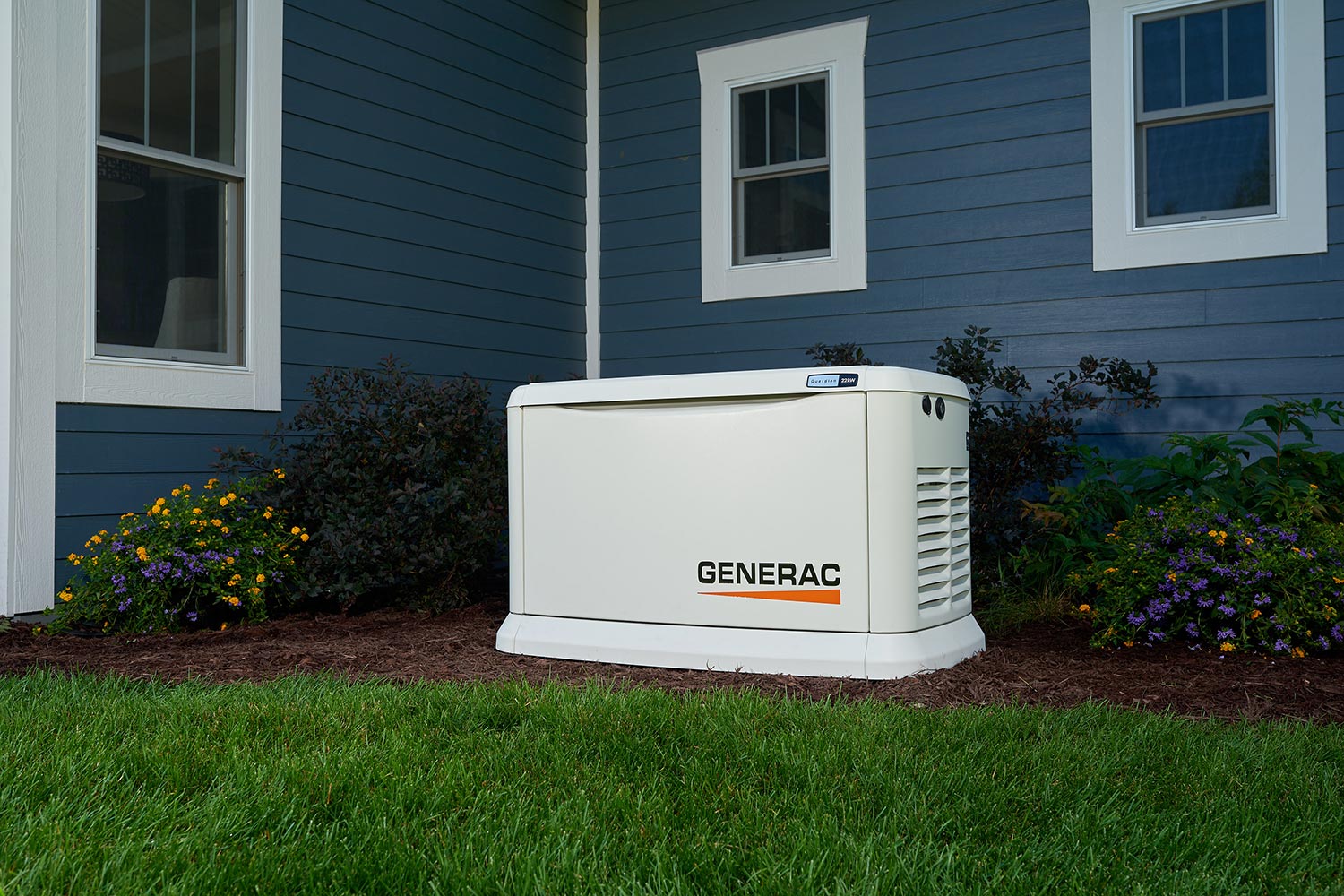
Air-cooled Generac
The right answer for most homes. Compact, quieter than you expect, runs on natural gas or propane, backs up the whole panel on a typical house or the essential circuits on a large one.
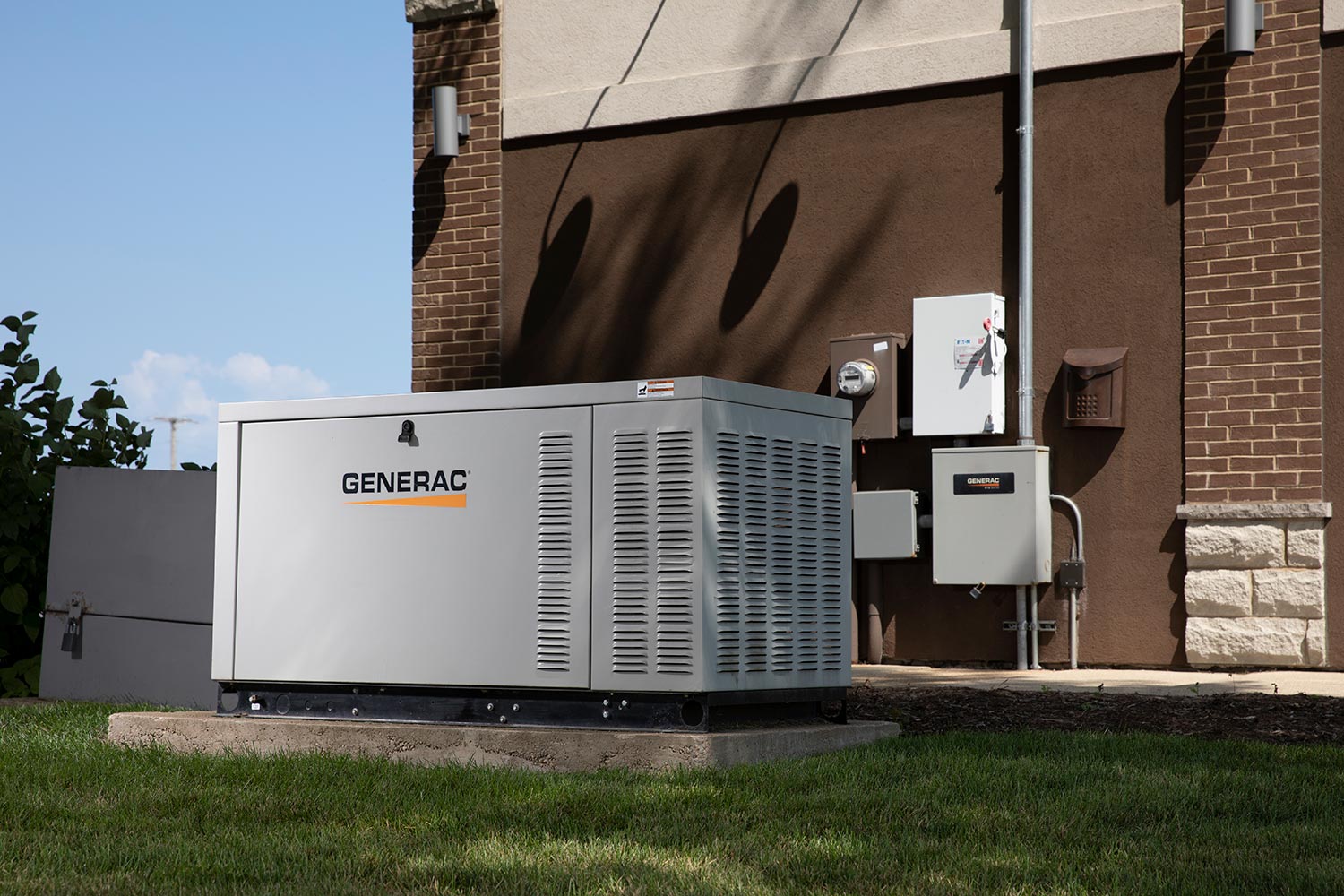
Liquid-cooled Generac
For large estates, guest houses, pool equipment and electrified kitchens that a single air-cooled unit cannot carry. Built for long run times and heavy loads.
Generac product imagery. Generac is a trademark of Generac Power Systems. The choice is made from a load calculation of your house, not from a sales target.
How an installation runs
Six steps, one contractor.
- 01
Site visit and load calculation
We look at the panel, the gas meter, the yard and what you need to keep running. The estimate follows within 24 hours.
- 02
Location and clearances
Pad placement that meets manufacturer clearances, local code, the HOA if there is one, and the Coastal Zone in Malibu.
- 03
Permit
County Line pulls the electrical permit and coordinates the gas work with a licensed plumber or your propane supplier.
- 04
Pad and set
Pad, the unit, the automatic transfer switch at the panel, and the conduit between them.
- 05
Connection and startup
Gas and electrical connections, startup, a simulated outage with you watching, and the inspection.
- 06
Service, twice a year, $600
Oil, filters, battery, a load test and a look at the transfer switch, both visits, for the year. Jeff's own comparison: the large installers quote about $1,000 for the same.
- 30 yrsIn the electrical tradeJeff Tucker has run County Line Electric in the Conejo Valley since the 1990s.
- #949580California contractor licenseLicensed, bonded and insured. Check it on the CSLB site any time.
- 24 hrsGenerator estimatesA written standby generator estimate within a day of the site visit.
- $600Twice-yearly generator serviceBoth visits, for the year. Jeff's comparison: the large installers quote the same service at about $1,000.
Service
A generator that is not serviced is a lawn ornament.
A standby generator is an engine that sits outside for years waiting for the one afternoon it is needed. Weekly exercise cycles keep it alive, but oil, filters, the battery and the transfer switch contacts still age. County Line services the units it installs twice a year, and services units other contractors installed too.
The twice-yearly service is $600 for the year, both visits. Jeff's own comparison, which you can check with a phone call: the large generator installers in this area quote about $1,000 for the same work. Generac's mobile app shows the unit's status, the last exercise and any fault, so you and the office both know it is ready.
Generators by area
Where the shutoffs are, we are.
- MalibuPSPS, Coastal Zone, propane
- Calabasas & Hidden HillsHOA approvals, fire zone
- Thousand OaksHome base, fastest response
- Pacific PalisadesRebuilds and existing homes
- Westlake VillageLake and North Ranch estates
- TopangaCanyon outages, propane
- Montecito & Santa BarbaraEstate backup power
- AltadenaRebuilds in the Eaton footprint
Generator questions
How fast does County Line Electric provide a generator estimate?
Within 24 hours of the site visit. County Line Electric looks at the electrical panel, the gas supply and the property, runs a load calculation, and sends a written estimate for a Generac standby generator installation the next business day.
What size standby generator does my house need?
It depends on what you want to keep running during an outage, not on square footage alone. A load calculation adds up the circuits: air conditioning, the well pump, pool equipment, electric cooking, EV charging, the refrigerators and the house loads. Most homes land on an air-cooled Generac. Large estates with guest houses or several air conditioning systems need a liquid-cooled unit. County Line sizes from the calculation and explains the choice.
Does a standby generator need a permit in California?
Yes. A permanently installed standby generator with an automatic transfer switch requires an electrical permit and inspection, and the gas connection requires plumbing work by a licensed contractor. In Malibu the Coastal Zone can add a review for the pad location. County Line Electric pulls the electrical permit as part of the installation.
Natural gas or propane?
Natural gas where there is a gas main, because there is no tank to fill. Propane where there is not, which includes parts of Malibu, Topanga and the Santa Monica Mountains. A propane generator needs a tank sized for several days of runtime, and County Line coordinates with your propane supplier.
Does County Line service generators it did not install?
Yes. County Line Electric services Generac standby generators installed by other contractors, including the twice-yearly maintenance of oil, filters, battery and transfer switch, and repairs when a unit faults.
How much does County Line charge for generator maintenance?
$600 a year for the twice-yearly service, both visits included: oil and filter changes, battery check, a load test and an inspection of the automatic transfer switch. Jeff Tucker's own comparison is that the large generator installers in Ventura and Los Angeles counties quote about $1,000 for the same service; County Line's price is on this page so it can be checked.
Where does County Line install generators?
Across Ventura, Los Angeles and Santa Barbara counties from its office in Newbury Park: Thousand Oaks, Westlake Village, Agoura Hills, Calabasas and Hidden Hills, Malibu, Topanga, Pacific Palisades, Brentwood and Bel Air, Studio City, Camarillo, Ventura, Santa Barbara, Montecito and Altadena.
Service
The $600 service, and why the price is on the page.
A standby generator is an engine that waits outside for years, and the twice-yearly service is what keeps it ready: oil and filter changes, the battery, a load test under real load, the transfer switch contacts, the exercise schedule and any fault codes in the controller. County Line charges $600 a year for both visits. Jeff Tucker's own comparison, which anyone can check with two phone calls, is that the large generator installers in Ventura and Los Angeles counties quote about $1,000 for the same work.
The price is published because a price that has to be asked for is a price that can change. It applies to units County Line installed and to units installed by someone else.
Timing
When to buy a generator, honestly.
The right time is spring and early summer. Shutoff season in Southern California runs from September into December, when the Santa Ana winds arrive, and that is when everyone calls. Lead times on Generac units and on permits stretch, gas work gets booked out, and a generator ordered in October may not be running until the season is over. A unit ordered in April is installed, inspected and exercised before the first red flag warning.
County Line says this on every generator page because it is true and because a customer who plans ahead gets a better installation: time to size it properly, time to place the pad well, time to get the HOA and the permit done without a rush.
In writing
What the estimate lists, line by line.
A generator estimate that says "installed" and a number is not an estimate. County Line's names every part, so two bids can be compared on the same page.
- The unit: Generac model, kilowatt rating, air-cooled or liquid-cooled, and the load calculation it was sized from
- The automatic transfer switch: amperage, whole-house or critical loads, and where it mounts
- The pad and the location, with the clearances to windows, doors and the property line
- The fuel: natural gas line size and run, or the propane tank, regulator and line, and who does that work
- The electrical: conduit, wire, breakers, surge protection, any panel work the house needs first
- The permit and inspection, and the HOA submittal where there is one
- Startup and a simulated outage with you present
- The twice-yearly service plan: $600 a year, both visits, and what each visit covers
Official references
Where the facts on this page come from.
County Line links to the authorities rather than restating them. Rules change; these pages are current.
- SCE Public Safety Power Shutoffs: why the hills and the coast lose power in wind events
- Cal Fire hazard severity zones: the map that decides which neighborhoods are shut off
- Generac: the equipment County Line installs
- CSLB license check: license #949580
Next step
Get the estimate before fire season does.
Name, phone, city and a line about the project. The office calls back, and a site visit is scheduled if it makes sense. No pressure, no sales script.
Or call (805) 499-0823. Monday to Friday, 8 to 4.